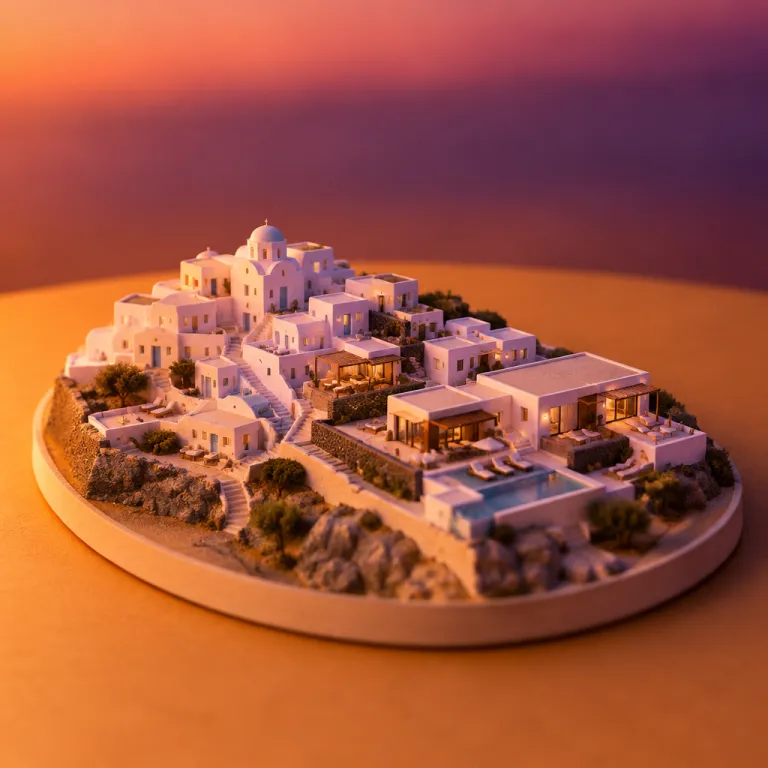
The grammar of the Cycladic village and what it means for your stay
Step off the ferry on any Greek island in the Cyclades and the architectural language feels instantly legible. Cubic houses with whitewashed walls, flat roofs and tiny openings cluster together, forming a compact village that seems almost carved from light. Those same forms now underpin the most thoughtful Cycladic vernacular architecture–inspired design hotels across the archipelago.
This grammar was never about aesthetics alone, and the best hotels remember that. Thick stone walls create thermal mass that keeps each room cool, while small windows and deep reveals shield you from the Aegean sun and the relentless wind. When you book a hotel that respects this logic, you feel the difference in both comfort and atmosphere.
Look closely at how rooms and terraces step with the terrain rather than fight it. In traditional Cycladic villages, exterior staircases link stacked volumes, creating layered sea views without towering over the chora. Design-led hotels that echo this pattern often deliver more intimate sea-view experiences than oversized resorts that flatten the hillside with one dominant block.
The inland chora, set back from the beach for protection from pirates and storms, also matters. Many of the most characterful hotels sit just behind the waterfront, where narrow lanes break the wind and frame glimpses of the Aegean Sea. On Mykonos, for instance, the Belvedere Hotel above Mykonos Town uses this sheltered position to create quieter terraces while keeping the harbour in sight.
On Mykonos and Naxos, you can read this grammar in both humble homes and high-end hotels. A small art hotel in a restored village house, such as Aegon Retreat in rural Naxos, may offer only a compact swimming pool, yet its proportions and shaded courtyard can feel more luxurious than a vast infinity pool exposed to every gust. The key is how the design mediates between interior rooms, exterior terraces and the surrounding Cycladic landscape.
Climate, materials and the functional logic behind Cycladic design
The whitewashed walls that define Cycladic villages began as a practical response to climate and materials. Limewash reflected heat, disinfected surfaces and could be renewed each season with minimal cost. When contemporary island hotels use authentic lime plaster rather than glossy paint, the walls breathe, age gracefully and soften the light inside every room; as architect Katerina Tsigarida notes, “lime-based finishes are as much about health and comfort as they are about appearance.”
Local stone, timber beams and earth-based mortars were not romantic gestures but the only materials at hand. On Naxos, where stone is abundant, you still see rough masonry bases supporting smoother white volumes, a pattern now echoed in many hotels that combine grounded stone plinths with lighter upper-level suites. This layering stabilises temperatures and anchors the building visually in the landscape.
Wind and piracy shaped the village plan as much as sun and heat. Houses turned their smallest façades to the prevailing meltemi, while rooms clustered around protected courtyards rather than exposing the main living spaces to the sea. When you evaluate hotels, notice whether the pool and terraces sit in wind shadow or on a showy but uncomfortable promontory.
Flat roofs once collected precious rainwater and provided working terraces for drying crops. Today, some design-led hotels reinterpret these roofs as private terraces with sea views, hot-tub corners or even a discreet pool private to one or two-room suites. The best examples keep parapets low and volumes modest, preserving the original village silhouette against the Aegean.
On Mykonos, the contrast between traditional houses in Mykonos Town and newer hotels near Kalo Livadi or Agios Stefanos is instructive. Older structures hug the ground, while some recent hotels rise too tall, breaking the historic grain and casting long shadows over neighbouring rooms. As a guest, you feel this in the way circulation works, the privacy of your private pool and the intimacy of your sea view.
How thoughtful design hotels translate Cycladic vernacular into luxury
The most compelling Cycladic vernacular architecture design hotels treat tradition as a framework, not a costume. They borrow the scale, massing and material palette of the Cycladic village, then refine details for contemporary comfort. You see it in the way suites open to shaded terraces rather than oversized glass walls that ignore the sun.
In Santorini, a well-considered hotel Santorini often carves rooms into the volcanic rock, echoing the island’s historic cave houses. Properties like Canaves Oia and Perivolas use thick walls and vaulted ceilings to moderate temperature naturally, while carefully placed openings frame sea views of the caldera without exposing you to glare. When a property adds a private pool or hot tub, the most successful designs recess these features into terraces, keeping the overall profile low.
On Mykonos, some hotels near Mykonos Town reinterpret the courtyard typology with a central swimming pool ringed by low volumes. At Cavo Tagoo Mykonos, for example, rooms and suites step around shared outdoor spaces, creating a sociable yet still private environment that feels like an expanded Cycladic home. The difference between this and a generic resort is the way each room maintains a direct relationship to the courtyard and the sea beyond.
Beachfront properties at Kalo Livadi or Agios Stefanos face a different challenge. A hotel on a private beach must balance direct sea access with protection from wind and salt, so thoughtful architects often tuck the main pool slightly inland, using dunes or low walls as buffers. Sea views remain uninterrupted, but you gain calmer water in the infinity pool and quieter terraces for evening drinks.
Across the islands, the most convincing art hotel projects integrate local craftsmanship into their design. Built in stone, lime and timber, they commission ceramics, textiles and artworks from local makers, turning each room into a subtle gallery. This approach feels more rooted than importing generic décor, and it aligns with the deeper logic of Cycladic architecture as a lived, evolving tradition.
Spotting pastiche and generic minimalism when you book
Not every property marketed as Cycladic or design-led truly understands the vernacular. Some hotels apply white paint, add a sculptural infinity pool and call it a day, ignoring the underlying logic of scale, orientation and material. Learning to read these signals helps you choose Cycladic vernacular architecture design hotels that feel authentic rather than theatrical.
Start with massing and height when you scan photos or satellite views. If a hotel looms above neighbouring houses with oversized blocks, it likely breaks the village grain that makes Cycladic settlements so appealing. Genuine vernacular-inspired hotels keep volumes low, stepping with the terrain and allowing the Aegean Sea and sky to dominate the horizon.
Next, examine how rooms relate to outdoor space. When every room has a large, exposed terrace facing the same direction, you may find little privacy and harsh afternoon sun. More considered hotels vary terrace depths, add pergolas and orient some rooms toward courtyards or side sea views, echoing the nuanced relationships found in historic villages.
Be wary of interiors that could sit in any global city. Endless white surfaces, glossy finishes and generic designer furniture often signal a missed opportunity to engage with Cycladic character. Look instead for tactile plaster, built-in benches, timber ceilings and subtle references to local forms, even in high-tech suites with a pool private to the room.
Location names can also mislead if you do not read the map carefully. A hotel labelled as being in Mykonos Town or near a famous beach like Kalo Livadi may actually sit on a busy road with limited sea views. Cross-check distances, elevation and orientation to understand whether you will enjoy true views of the Aegean or just a distant glimpse between buildings.
The new wave of contemporary Cycladic design and how to choose well
A new generation of architects is reinterpreting Cycladic forms for today’s travellers. Their best work shows up in Cycladic vernacular architecture design hotels that feel both timeless and unmistakably contemporary. You notice it in the quiet confidence of the façades and the way each hotel choreographs your movement from entrance to sea.
These projects often use traditional materials in sharper, more minimal compositions. Stone bases, whitewashed walls and timber pergolas remain, but details are cleaner, junctions more precise and glazing more strategic. Instead of copying old houses, they extract principles about shade, airflow and proportion, then apply them to larger programs with pools, restaurants and wellness spaces.
On Naxos, some new hotels outside the main town reinterpret the farmstead courtyard as a sequence of terraces stepping toward the beach. Suites may have a private pool or semi-private swimming pool shared with one neighbouring room, yet the overall massing still reads as a low, clustered settlement. The result feels like a contemporary hamlet rather than a standalone resort dropped onto the landscape.
In Santorini and other volcanic islands, designers increasingly frame experiences around the wider territory, not just the hotel. A stay might pair caldera-facing rooms with excursions to vineyards and coastal tavernas, deepening your sense of place. For wine-focused travellers, pairing such a hotel Santorini with a curated tasting itinerary built around volcanic vineyards can be planned using a specialised wine guide to Santorini’s vineyards on stay in Cyclades.
Across the Cyclades, the most persuasive contemporary hotels treat the Aegean as a constant reference point. Whether you are in an art hotel above Mykonos Town, a quiet retreat near Agios Stefanos or a low-slung property on a lesser-known Greek island, the architecture should frame views of the Aegean Sea without dominating them. When you sense that balance, you are likely in a place where vernacular intelligence and modern design finally meet.
FAQ
How can I tell if a Cycladic design hotel is genuinely vernacular inspired ?
Look for low, cubic volumes with whitewashed walls, small openings and terraces that follow the terrain rather than fight it. Genuine Cycladic vernacular architecture design hotels use local stone, lime plaster and shaded courtyards instead of relying only on a dramatic infinity pool. Interiors should feel rooted in the Cycladic context, not like generic minimalism that could be anywhere.
Are beachfront Cycladic hotels always better than village locations ?
Beachfront hotels offer immediate access to the sea and often impressive sea views, but they can be wind-exposed and busier. Village-based hotels, especially in historic chora areas, usually provide more shelter, richer local life and architecture that closely follows Cycladic vernacular patterns. Many travellers choose a hotel near the beach but slightly inland, gaining both comfort and easy access to the Aegean.
What should I look for in room layouts and outdoor spaces ?
Prioritise rooms and suites that balance privacy, shade and views rather than simply promising the largest terrace or pool. Thoughtful hotels vary terrace depths, add pergolas and sometimes orient rooms toward courtyards, side sea views or gardens to echo traditional Cycladic layouts. Features like a private pool or hot tub work best when recessed into protected terraces, not exposed on windy edges.
Is staying in Mykonos Town or Santorini’s caldera worth the premium ?
Staying in Mykonos Town or on Santorini’s caldera offers unmatched atmosphere, walkable streets and dramatic views of the Aegean Sea. However, rooms are often smaller, and hotels must work harder within tight historic fabrics to integrate pools and terraces. If you value space, quieter nights and easier access to a beach, consider nearby areas that still follow Cycladic vernacular patterns but at a slightly lower intensity.
How do Cycladic design principles affect comfort in summer heat and wind ?
Cycladic vernacular architecture was developed precisely to handle strong sun, heat and wind, and good hotels leverage that knowledge. Thick walls, small windows, shaded terraces and courtyards create naturally cooler interiors and more comfortable outdoor spaces than exposed glass boxes. When you choose Cycladic vernacular architecture design hotels that respect these principles, you usually enjoy better sleep, calmer pools and more usable terraces throughout the day.